
Table of Contents
BMW Alpina Engine Problems: Why Regular BMW Garages Misdiagnose

What Makes BMW Alpina Engines Different
Common BMW Alpina Engine Problems Seen in Dubai
High temperatures, stop-start traffic, and aggressive driving conditions in Dubai expose Alpina engines to stress faster than in Europe. Below are the most common issues we see during BMW Alpina engine repair inspections.
1. Turbocharger Performance Issues
On models like the BMW Alpina B4, turbo-related problems are frequently misread.
What regular garages assume:
- Failing turbo
- Wastegate malfunction
- Boost leak
What’s actually happening:
- Incorrect Alpina boost calibration
- Software mismatch after updates
- Heat-related pressure inconsistencies
Replacing a turbo without addressing Alpina-specific calibration often leads to repeat failures.
2. Engine Misfires Under Load
Misfires in Alpina engines usually occur only under high torque demand, not at idle.
Common misdiagnosis:
- Faulty ignition coils
- Worn spark plugs
- Injector failure
Actual causes:
- Alpina-specific ignition timing maps
- Fuel pressure deviations under boost
- ECU adaptation errors
This is where Alpina engine diagnostics become essential.
3. Oil Consumption & Pressure Warnings
Many BMW Alpina owners panic when they see oil warnings shortly after servicing.
Typical garage conclusion:
- Worn piston rings
- Valve seal failure
Real issue:
- Alpina oil viscosity requirements ignored
- Incorrect service intervals
- Improper oil level calibration reset
Using standard BMW oil specs on an Alpina engine is a common and costly mistake.
4. Cooling System Overstress
Alpina engines generate more sustained torque, meaning heat builds differently.
Misdiagnosed as:
- Faulty thermostat
- Radiator blockage
- Cooling fan issues
Actual problem:
- Alpina cooling logic not recognized
- High-load heat cycles not properly logged
Software-controlled cooling behavior misunderstood
Why Regular BMW Garages Misdiagnose Alpina Engines
Even experienced BMW technicians can struggle with Alpina vehicles. Here’s why.
Alpina Uses Different Engine Logic
Alpina ECUs behave differently from standard BMW ECUs. Generic BMW diagnostic tools may show fault codes, but they don’t explain why those faults occur in Alpina engines.
Performance Calibration Changes Everything
BW AlpinaM engines are tuned for:
- Higher sustained torque
- Earlier power delivery
- Longer high-load operation
This means symptoms appear differently, and standard BMW repair logic often fails.
Lack of Alpina-Specific Data
Most BMW garages:
- Do not have Alpina engine maps
- Do not reference Alpina torque models
- Do not understand Alpina cooling and oil strategies
As a result, they replace parts instead of fixing root causes.
Why You Need a BMW Alpina Specialist Garage in Dubai
A Alpina specialist BMW garage understands that Alpina engines require a different diagnostic mindset.
At a specialist level, diagnostics include:
- Alpina-specific ECU reading and interpretation
- Load-based engine behavior analysis
- Heat-cycle diagnostics (not just cold-start checks)
- Performance engine stress evaluation
This approach prevents unnecessary part replacement and ensures correct long-term repairs.
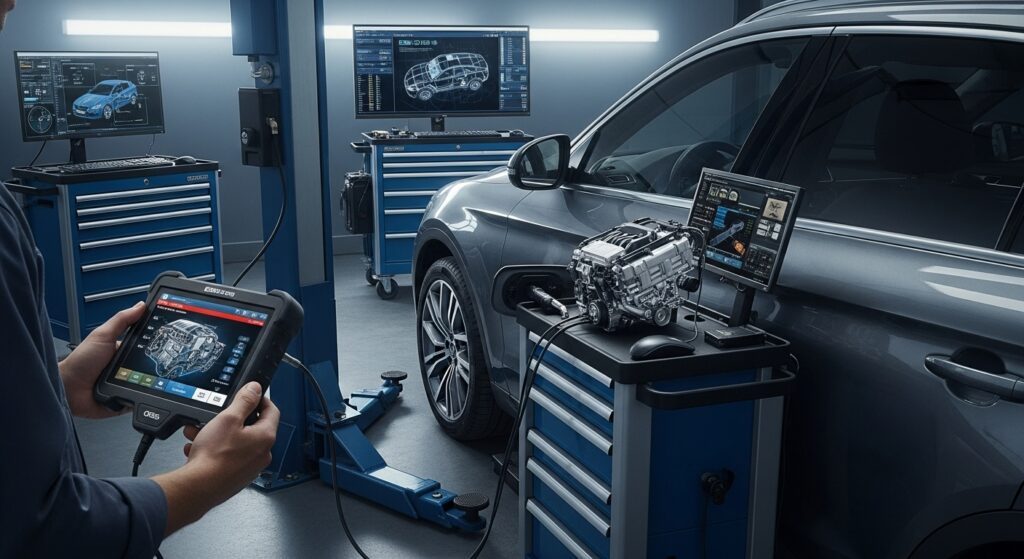
BMW Alpina B4 Engine Repair: What Proper Diagnosis Looks Like
For a BMW Alpina B4 engine repair to be done correctly, diagnostics must include:
- Performance fuel pressure analysis
- Turbo response under real driving load
- Alpina ignition mapping checks
- Oil system behavior under torque stress
- Cooling performance during extended boost
Anything less results in temporary fixes.
BMW Performance Engine Repair vs Standard BMW Repair
| Aspect | Standard BMW Repair | BMW Alpina Performance Repair |
| Diagnostics | Fault-code based | Load & performance based |
| ECU Analysis | Generic BMW | Alpina-specific |
| Parts Replacement | Trial & error | Data-driven |
| Long-term Reliability | Inconsistent | High |
This distinction matters—especially in Dubai conditions.
Choosing the Right BMW Specialist in Dubai
When looking for a BMW specialist Dubai, especially for Alpina models, ask:
- Do you have experience with Alpina engines?
- Do you perform performance-based diagnostics?
- Do you understand Alpina-specific ECU behavior?
- Do you repair, not just replace?
A true specialist focuses on engine health, not just clearing warning lights.